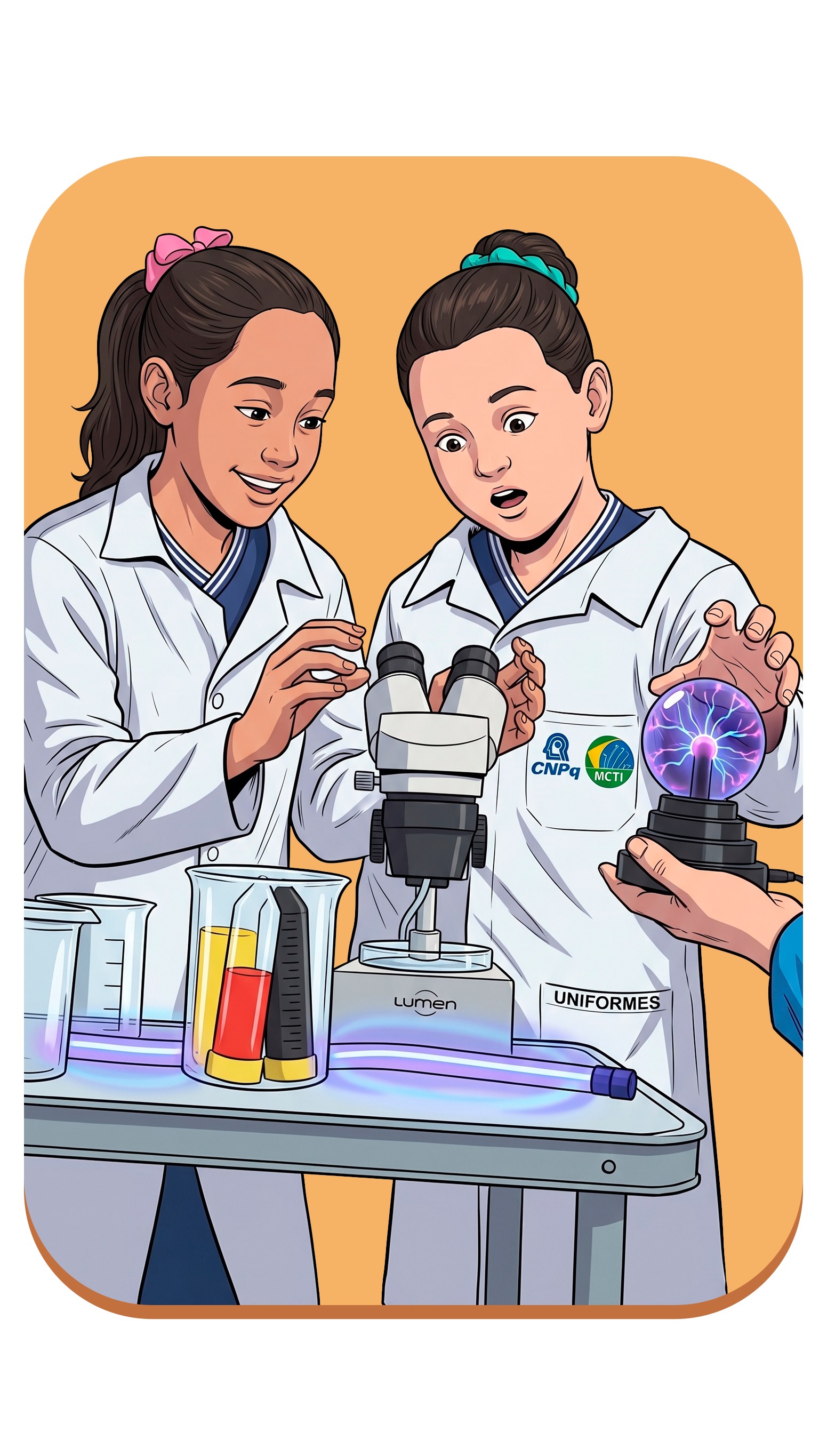
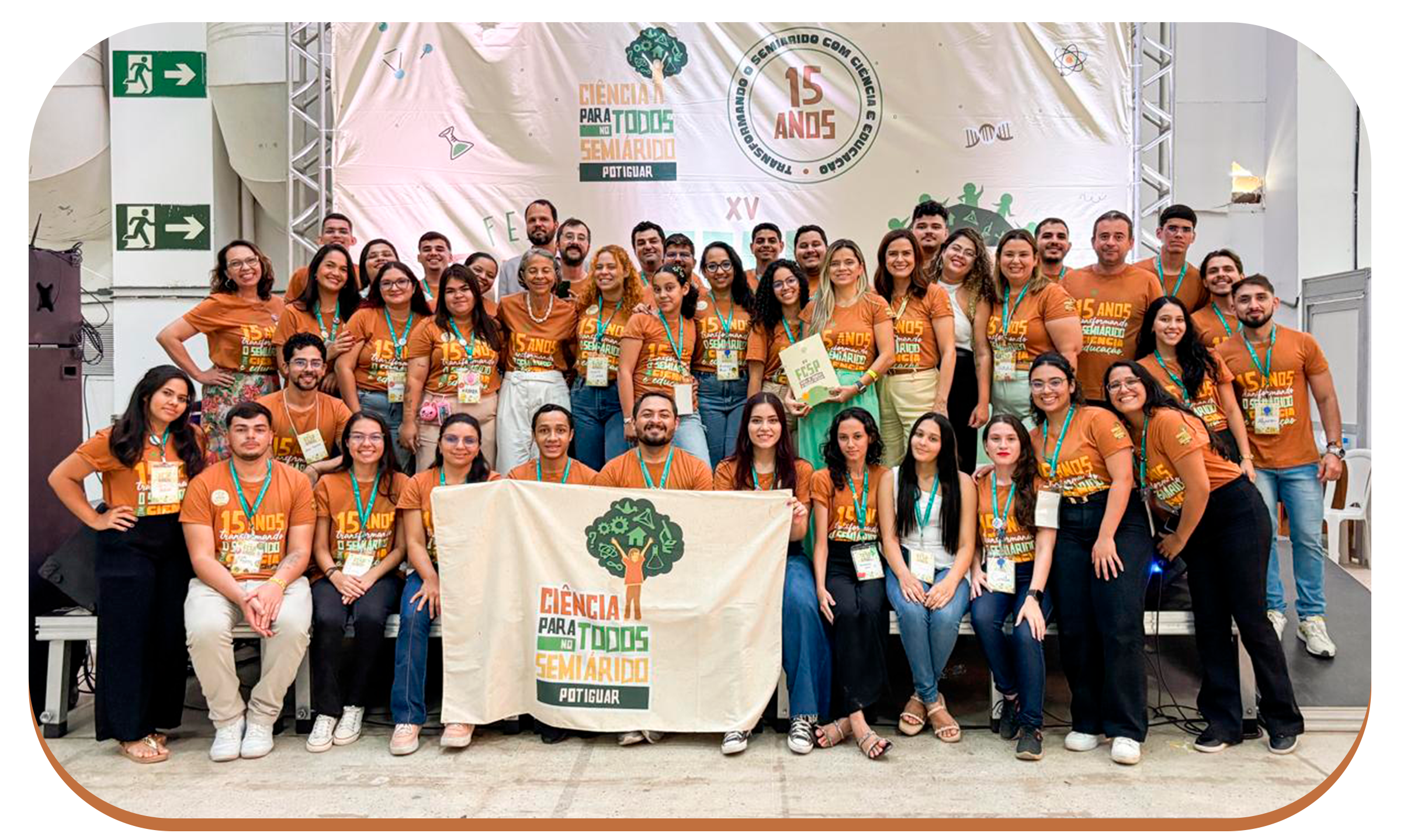
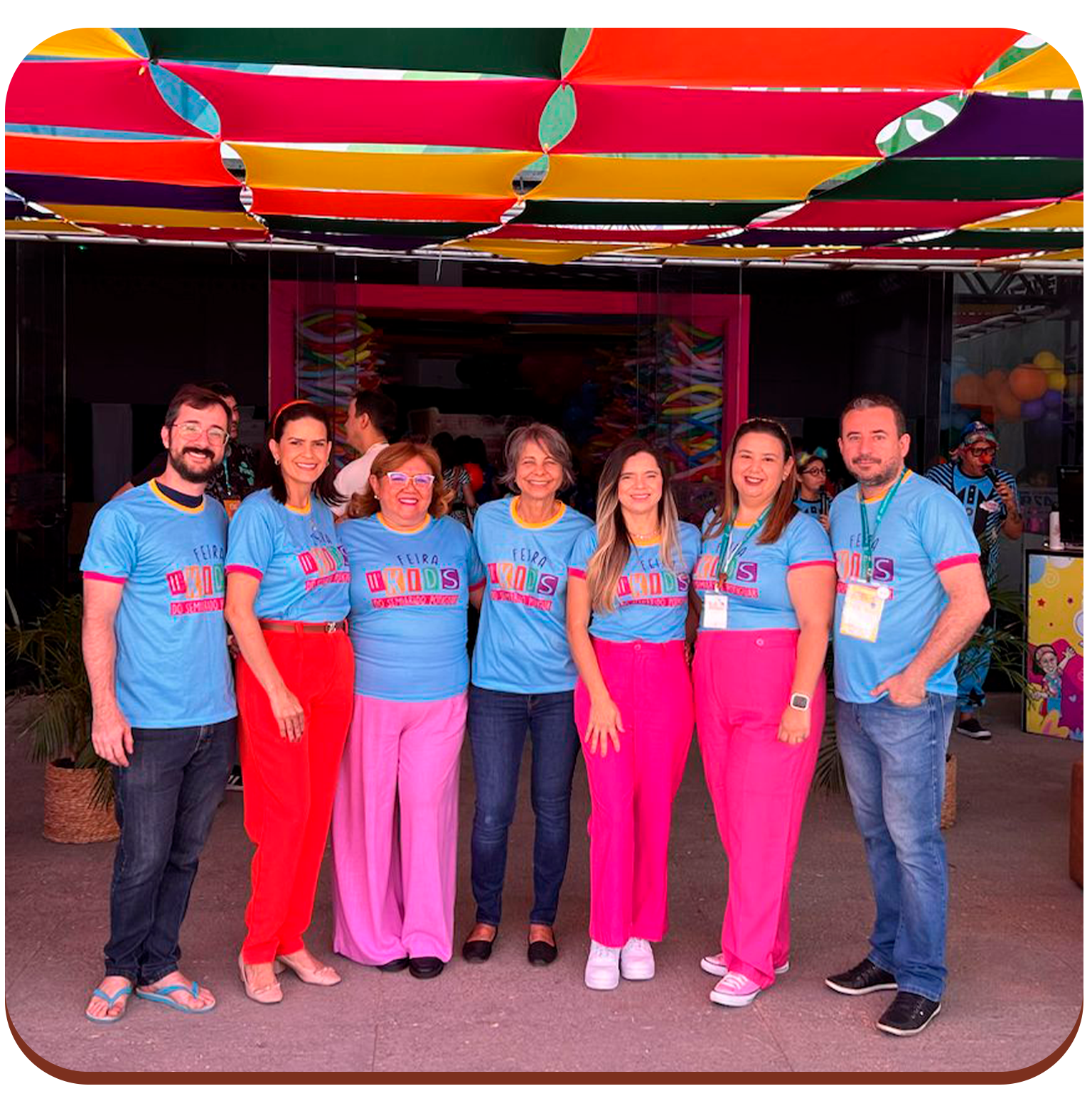
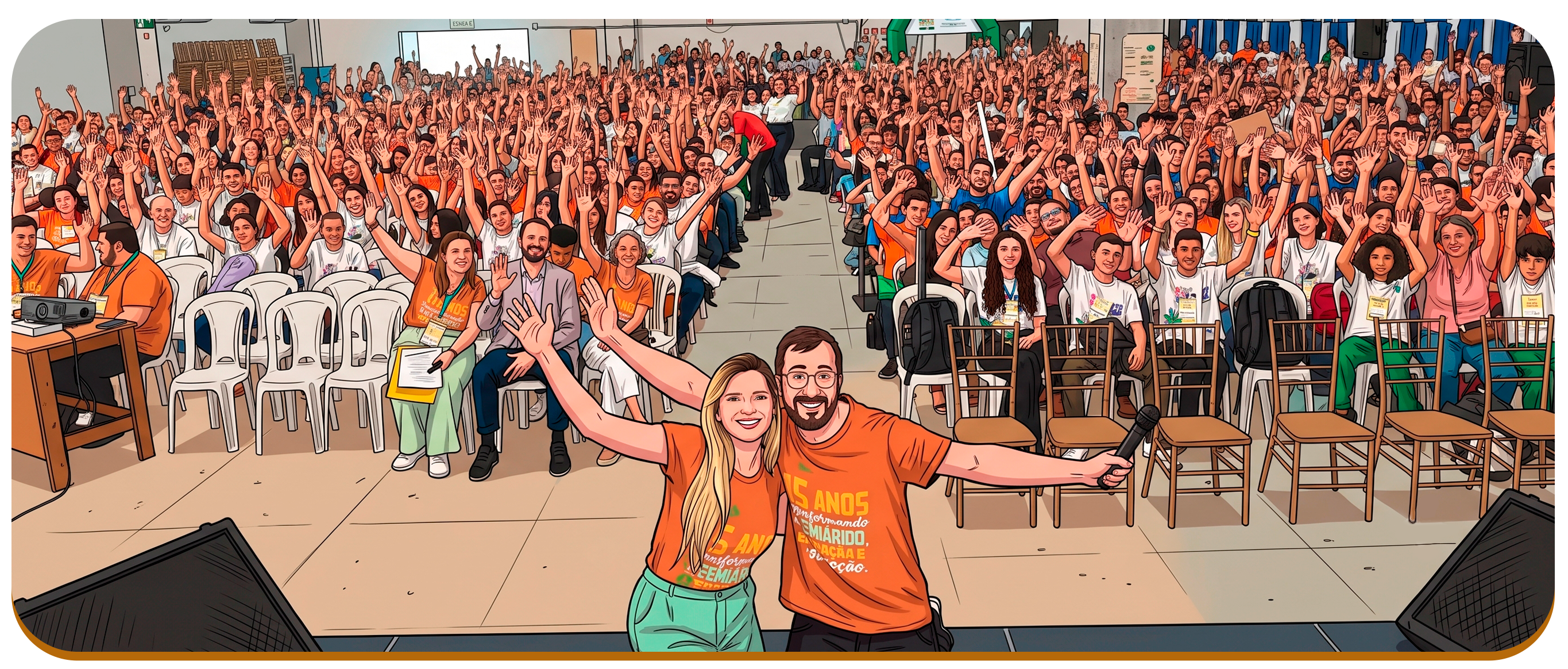
The story begins before the Ciência para Todos program, and even before the Fair itself: in school visits by car carrying a projector, back in 2007. Celicina Azevedo, professor at UFERSA, together with then PhD candidate Cybelle Barbosa, drove through schools of the 12ª DIRED looking for 2 or 3 curious students per classroom to teach the scientific method. What started as a grassroots effort became a social technology and the Fair we know today.
- 2007
The first seed
Celicina Azevedo and Cybelle Barbosa begin visiting schools of the 12ª DIRED, presenting the Metodologia Científica ao Alcance de Todos (MCAT). The work was carried out directly in the classrooms, aiming to spark students' interest in scientific research.
- 2010
Ciência para Todos is born
The experience built up in the schools gives rise to the Ciência para Todos no Semiárido Potiguar program, broadening the reach of science education and strengthening the training of public-school teachers and students.
- 2011
The first Science Fair
The 1st Feira de Ciências do Semiárido Potiguar is held. The team also gains Felipe Ribeiro, Natália Celedonio and Cristiane Moura, consolidating a network of support for school research.
- 2014
Expansion to new territories
The program expands to different regions of Rio Grande do Norte, strengthening teacher training and bringing MCAT to a growing number of public schools. MCAT is certified as a social technology by the FBB bank and receives the Paulo Freire award for innovation in teacher training.
- 2017
Science reaches further
School and regional fairs consolidate as permanent stages of the training process, allowing more students to present their research and represent their municipalities. MCAT wins the Brazilian creative learning challenge.
- 2019
International recognition
MCAT is recognized by the OEI and the Inter-American Development Bank as an innovative technology in teacher training.
- 2020
Ten years of science nonstop
Amid the COVID-19 pandemic, teacher training, school follow-up and the Science Fair were moved online, ensuring the continuity of the work across the state. To celebrate the first decade of the Feira de Ciências do Semiárido Potiguar, Volumes 1, 2 and 3 of the Anais were published with ISBN, gathering and preserving the memory of the projects presented between editions I and X.
- 2021
The start of the return
With the advance of vaccination and the easing of educational activities, the program began a gradual return through hybrid actions. Training, meetings and follow-up activities started to combine in-person and virtual moments, maintaining support for the schools and strengthening scientific culture despite the challenges of the period.
- 2022
In-person return and the birth of the Kids Fair
The return of in-person activities marked a new phase of growth for the program. Beyond expanding teacher training and school follow-up, the first edition of the Kids Fair was held, creating a dedicated space to value curiosity, creativity and scientific leadership among children in the early years of basic education.
- 2024
14th edition of the Fair
The Fair reaches its 14th edition, now organized in the Kids, Júnior and Juvenil categories, with 585 projects presented, reflecting the growth of scientific culture in the schools.
- 2025
15 years inspiring young researchers
The 15th Science Fair brings together 648 projects across the Kids, Júnior and Juvenil categories, consolidating the quality of the research developed in the participating schools.
- 2026
Present across the whole state
The program begins operating in all ten educational territories of Rio Grande do Norte, strengthening teacher training, the implementation of MCAT and the holding of science fairs in hundreds of public schools, with an expected participation of more than 10,000 students in the school fairs.